
Matcha is often recognized by its vibrant green color and smooth texture, but what truly defines its quality is the way it is made. Unlike ordinary green tea, matcha requires a carefully controlled production process where every step affects flavor, texture, and consistency.
For matcha produced in Guizhou, China, this process is shaped by both natural conditions and modern manufacturing standards. Guizhou has become an important region for premium matcha because it combines clean growing environments with precise, food-grade processing. Understanding how matcha is made helps beginners recognize why quality varies so widely between products and why good matcha feels noticeably different from regular green tea.
This guide explains the complete journey of Guizhou matcha, from tea plant cultivation to the fine powder in your cup.
Step 1: Growing Tea Plants for Matcha
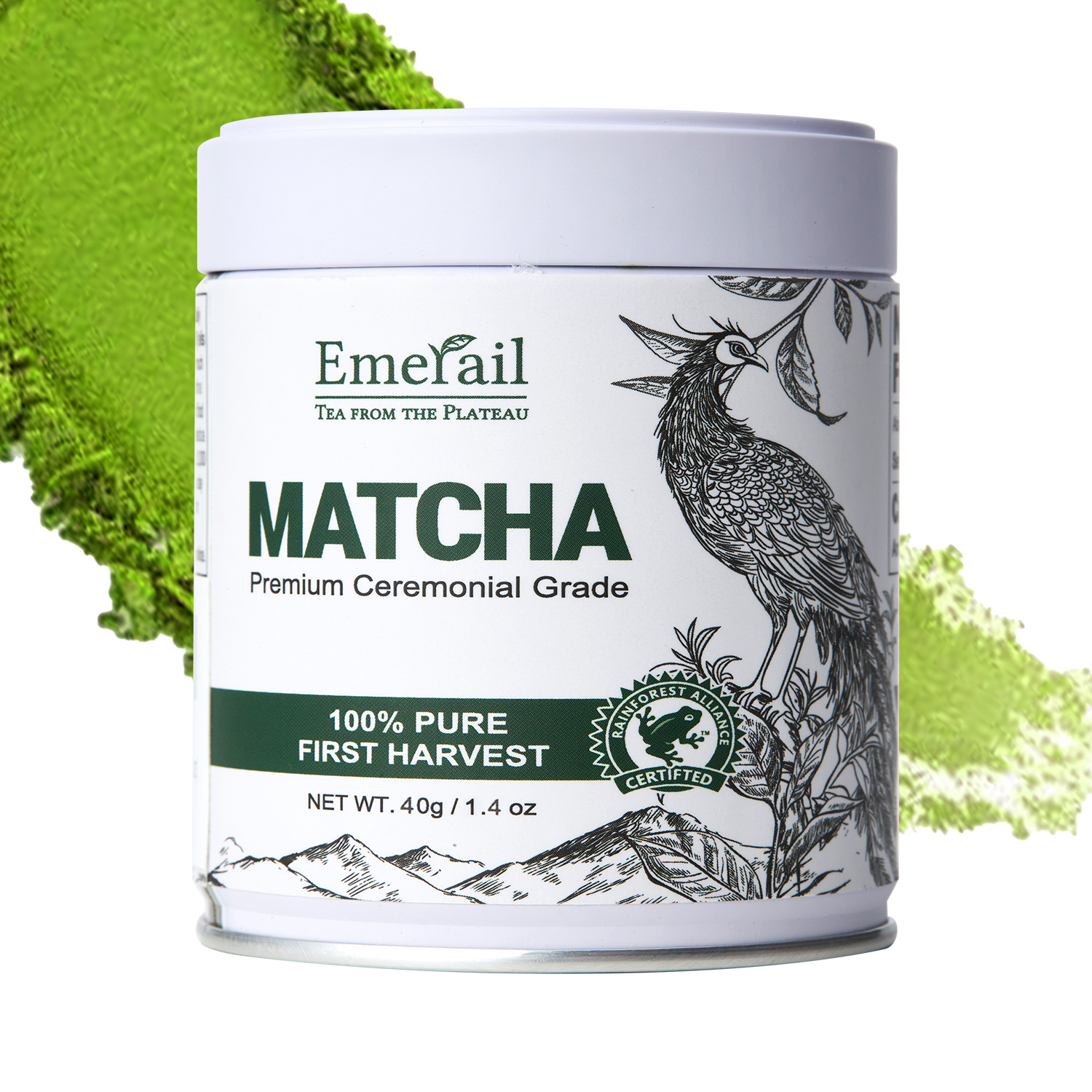
The process of making matcha begins long before harvest. Tea plants intended for matcha are cultivated differently from those used for loose-leaf green tea.
In Guizhou, tea gardens are often located at elevations between 800 and 1200 meters. These high-altitude environments provide cooler temperatures, frequent cloud cover, and stable humidity. Together, these conditions slow plant growth and encourage balanced leaf development.
Before harvest, tea plants are grown under managed light conditions. Rather than intense direct sunlight, the plants receive softened light, often naturally supported by cloud cover and mountainous terrain. This helps increase chlorophyll content and contributes to matcha’s bright green color while reducing harsh bitterness.
The goal at this stage is not speed, but balance. Slower growth allows the leaves to develop smoother flavor and better structure for fine grinding.
Step 2: Selecting the Right Tea Leaves
Not all tea leaves are suitable for matcha. Leaf selection plays a major role in determining final quality.
For high-quality Guizhou matcha, producers focus on:
- Young, tender leaves
- Even leaf size and thickness
- Leaves free from damage or discoloration
Younger leaves are naturally softer and less fibrous, which makes them easier to refine and grind into a smooth powder. Using older or tougher leaves often results in excessive bitterness and grainy texture.
Harvest timing is closely controlled. Leaves picked too early lack complexity, while leaves picked too late lose smoothness. Precision at this stage directly affects the final drinking experience.
Step 3: Steaming to Preserve Freshness
Immediately after harvest, the leaves undergo steaming. This step is essential and cannot be delayed.
Steaming serves several important purposes:
- Stops oxidation
- Preserves the green color
- Locks in fresh aroma
- Prevents browning
Without proper steaming, the leaves would oxidize and darken, losing the characteristics that define high-quality matcha. For Guizhou matcha, steaming is carefully timed to preserve clarity without damaging delicate leaf structure.
This step sets the foundation for color and freshness throughout the rest of the process.
Step 4: Drying and Leaf Refinement
After steaming, the leaves are dried to remove moisture while maintaining flexibility. At this stage, the leaves are not yet matcha powder.
The dried leaves are then refined by removing stems and veins. These parts of the leaf contribute rough texture and bitterness and are not suitable for matcha.
What remains is the soft leaf material that will eventually become matcha powder. This refined leaf base is critical for achieving smooth texture and balanced flavor.
Skipping or rushing this step often leads to gritty matcha with uneven taste.
Step 5: Grinding Leaves into Matcha Powder
The transformation from refined leaf material to matcha powder is one of the most important stages.
Grinding must be done slowly and carefully. Excessive heat damages color, aroma, and flavor. For this reason, Guizhou matcha producers prioritize controlled grinding methods that protect leaf integrity.
Slow grinding produces:
- Ultra-fine powder
- Smooth mouthfeel
- Even flavor distribution
Fast grinding methods may increase output but often result in dull color and coarse texture. High-quality matcha favors precision over speed.
Why the Production Process Matters So Much

Every stage of matcha production builds on the previous one. Mistakes cannot be corrected later.
If leaves are poorly cultivated, grinding cannot fix bitterness. If steaming is rushed, color cannot be restored. If refinement is incomplete, texture suffers.
This is why matcha quality varies so widely across the market. True matcha quality reflects patience, consistency, and careful control at every stage.
Guizhou matcha stands out because it combines favorable natural conditions with disciplined processing standards, producing reliable results batch after batch.
How Matcha Differs from Regular Green Tea Processing
Although matcha and green tea come from the same plant, their processing paths diverge early.
Regular green tea is:
- Grown primarily for infusion
- Brewed and discarded
- Light in texture and body
Matcha is:
- Cultivated specifically for powder
- Consumed whole
- Richer and more concentrated
Because matcha uses the entire leaf, production demands far greater attention to detail. Any flaw becomes immediately noticeable in the final drink.
How Processing Affects Taste and Texture
Many beginners are surprised by how much processing affects taste.
Careful cultivation and grinding create matcha that tastes:
- Smooth instead of sharp
- Balanced instead of bitter
- Clean instead of muddy
Poor processing leads to:
- Grainy mouthfeel
- Dull or yellow-green color
- Harsh bitterness
Understanding this connection helps explain why high-quality matcha feels more satisfying even with simple preparation.
Consistency and Food-Grade Standards
Modern matcha production in Guizhou places strong emphasis on food-grade safety and consistency.
This includes:
- Clean processing facilities
- Controlled moisture and temperature
- Consistent batch testing
These standards ensure that matcha is not only enjoyable, but also reliable for daily use. Consistency matters especially for people who drink matcha regularly or use it in recipes.
Can High-Quality Matcha Be Mass Produced?
High-quality matcha is difficult to mass produce without sacrificing quality.
Traditional shortcuts often involve:
- Faster grinding
- Reduced leaf selection
- Simplified processing
While these methods increase volume, they usually compromise texture and flavor. Guizhou matcha producers who prioritize quality accept lower yields in exchange for better results.
This balance between scale and craftsmanship explains why premium matcha remains a specialized product rather than a commodity.
How to Recognize Well-Made Matcha
After learning the production process, beginners can better evaluate matcha quality.
Well-made matcha typically shows:
- Bright natural green color
- Ultra-fine texture
- Clean aroma
- Smooth taste without harsh bitterness
These traits reflect careful cultivation and proper processing rather than marketing claims.
Common Questions About Matcha Production (FAQ)
Why is matcha ground into powder instead of brewed?
Consuming the whole leaf creates a richer and more complete experience.
Does grinding speed affect quality?
Yes. Slower grinding protects flavor and texture.
Can poorly made matcha be fixed by preparation?
No. Preparation cannot correct fundamental production flaws.
Is all matcha made the same way?
The core steps are similar, but quality depends on execution.
Final Thoughts
Matcha is not simply powdered green tea. It is the result of careful cultivation, precise processing, and disciplined grinding.
In Guizhou, China, favorable natural conditions combined with modern production standards have created a reliable source of smooth, high-quality matcha suited for daily life. Understanding how matcha is made allows beginners to appreciate why quality matters and how the right production process leads to a better experience in every cup.